Signs Your Car Door Lock Actuator Is Wearing Out
Your car's locks used to close with a crisp, confident clunk. Lately you get a tired buzz, or a grinding whir, or sometimes nothing at all. One door ignores the key fob. Another locks only on the third try.
That's a classic pattern for a failing car door lock actuator. It's a small part, hidden inside the door, but it's behind a lot of power lock problems. Here's how to spot the signs, what causes them, and what to do before a small annoyance turns into a lockout or a security risk.
What Does a Door Lock Actuator Do?
Think of the actuator as a tiny motor with gears. Every time you press the lock button, use your key fob, or turn the key, it moves the lock mechanism inside that door. Most cars have one actuator per door, and some have one for the trunk or hatch.
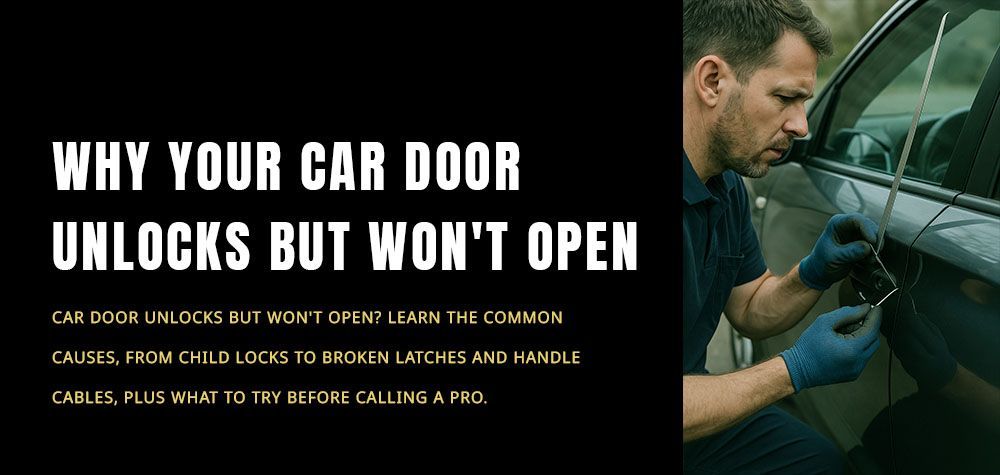
It does one job: move the lock between "locked" and "unlocked." It doesn't open the door itself. That's the latch's work, which we cover in our guide on why your car door unlocks but won't open.
Because you lock and unlock a car thousands of times, this little motor wears out like anything else that moves.
7 Signs Your Door Lock Actuator Is Failing
1. One Door Won't Lock or Unlock With the Fob or Switch
This is the most common sign. You press the button, three doors respond, and one stays put. Actuators fail one at a time, so a single door that won't power lock or unlock almost always points to that door's actuator.
2. A Buzzing, Grinding, or Clicking Sound From the Door
Put your ear near the door and have someone press the lock button. A healthy actuator makes a short, solid sound. A failing one may buzz, whir, click, or grind. That usually means the motor is running but the gears inside are stripped or worn, so nothing moves.
3. Slow or Weak Locking
The lock moves, but lazily. It sounds sluggish and may stop before it finishes. A motor that's running out of strength often starts this way.
4. Locks That Work Sometimes and Fail Other Times
Intermittent trouble is a warning. The lock works in the morning and fails in the evening. It works if you press the button three times. A worn actuator can hit a dead spot in its movement and then move on the next try.
5. The Power Lock Fails, but the Key or Manual Lock Still Works
This is a very useful test. If you can lock and unlock the door by hand, with the key or the lock knob, but the button and fob do nothing, the lock itself is fine. The electric part is the problem.
6. No Sound at All From One Door
You press the button, and there's silence from that door while the others click. The actuator may be dead, or the wiring to it may be broken.
7. Doors That Seem to Lock or Unlock on Their Own
Some drivers notice locks cycling for no reason, or a door that stays unlocked after they lock the car. A failing actuator can cause this. So can wiring or fob trouble, which is why a proper check matters.
Is It the Actuator or Something Else?
Not every lock problem is the actuator. Here's how to tell.
- Only one door misbehaves: likely that door's actuator.
- All doors stop working at once: more likely a blown fuse, a bad relay, a weak car battery, or a dead key fob battery.
- The fob doesn't work, but the door switch does: the fob or its battery.
- Doors unlock, but won't open: a latch, handle, or cable problem, not the actuator.
- The key won't turn or goes in hard: a lock cylinder or key issue.
A mix of symptoms can mean more than one problem. That's why a proper diagnosis saves money.
What Makes Actuators Wear Out?
A few things speed up the damage.
- Age and use. Every lock cycle wears the motor and its plastic gears a little.
- Cold weather. Cold stiffens grease and makes the motor work harder. Our post on how weather affects your locks explains why winter is hard on lock parts.
- Moisture and dirt. Water that gets into the door can rust contacts and clog the mechanism.
- Forcing the lock. Yanking on a stuck lock by hand strains the gears.
- Electrical faults. Low voltage or shorts can burn out the motor early.
Regular upkeep helps too. Our guide on signs that your locks need maintenance is worth a read.
Can You Keep Driving With a Bad Actuator?
Usually the car still runs. But the risks are real.
- A door that won't lock is a security risk. Anyone can open it, and things inside your car are easier to steal.
- A door that won't unlock can leave you or your passengers stuck, or locked out.
- A stuck motor can drain your battery if it keeps trying to run.
- A failing lock gets worse. It rarely fixes itself.
If your car is parked outside, a door that won't lock is a good reason to act soon.
What You Can Do Right Now
- Test every door with the key fob and the switch inside the car. Write down which ones fail.
- Listen closely. Have a helper press the button while you hold your ear near each door.
- Try the manual lock. Use the key or the lock knob. If that works, the lock is fine and the actuator is the likely culprit.
- Replace the fob battery. It's cheap, and it rules out an easy cause.
- Check the fuse. Your owner's manual shows which fuse runs the power locks. If every door is dead, start here.
- Lock the door by hand and take your key. Don't leave a car parked with a lock you can't secure.
- Don't force the lock or spray oil into the door. It can make the problem worse.
- Get it checked soon, before it leaves you locked out.
How a Locksmith Can Help
Not sure what's failing? Our automotive locksmith services team can help you sort it out. We can:
- Work out whether the issue is the actuator, the fob, the wiring, or the lock cylinder
- Get you into your car if a faulty lock leaves you stuck outside
- Help with key and fob problems, including car key replacement
- Repair or replace worn locks and cylinders
We'll be straight with you. If the repair needs a deeper electrical fix or door-panel work, we'll say so and point you the right way, so you don't pay for the wrong job.
You don't have to wait for business hours. Our 24-hour locksmith team is available any time, and our mobile locksmith service comes to you. Look up a car locksmith near you, check our locksmith prices, or call (888) 947-5585.
Frequently Asked Questions
Q: How do I know if my door lock actuator is bad?
A: The big clues are one door that won't power lock or unlock, odd noises from the door, slow locking, and a lock that works by hand but not by button.
Q: Why does only one of my car doors not lock with the remote?
A: Each door has its own actuator. When one fails, the others keep working. That makes a single dead door the most common sign.
Q: What does a bad door lock actuator sound like?
A: Often a buzz, a whir, a click, or a grinding noise. Sometimes there's no sound at all.
Q: How long does a door lock actuator last?
A: It depends on the car, the climate, and how much you use it. Many last for years, but they do wear out. Heavy use and extreme weather shorten their life.
Q: Can a dead key fob battery act like a bad actuator?
A: Yes. If the fob won't work but the door switch does, the fob battery is the first thing to check.
Q: Is a bad actuator expensive to fix?
A: Cost depends on the car and the door. Parts are usually modest, but labor varies. Get a quote first.
Final Thoughts on Door Lock Actuator Problems
A failing door lock actuator rarely arrives with a bang. It starts with a slow lock, a strange buzz, or one door that ignores the fob. Those small signs are your chance to act before you're locked out or stuck with a car that can't be secured.
Run the quick checks above. If one door keeps misbehaving, get it looked at. Brothers Locksmith is available day or night at (888) 947-5585.
Call Us Any Time!