What Makes a Lock “High-Security” — Marketing vs Reality
The term high-security lock appears everywhere — product packaging, hardware stores, and online listings all promise superior protection. But not every lock labeled “high-security” truly delivers meaningful resistance against burglary. For homeowners, the challenge lies in separating genuine security features from marketing claims. Understanding what actually makes a lock high-security helps you invest in protection that works in real-world scenarios rather than relying on buzzwords.
How Much Time Burglars Spend on Different Lock Types
Why the Term “High-Security” Can Be Misleading
Unlike some industries with strict labeling standards, the lock market often uses “high-security” as a promotional term rather than a regulated classification. Many standard locks include minor upgrades or cosmetic enhancements yet still carry the high-security label. This creates confusion, leaving homeowners unsure whether they’re purchasing advanced protection or a slightly improved basic lock.
True high-security locks go beyond appearance or brand reputation. They are engineered with advanced internal mechanisms, durable materials, and controlled key systems designed to resist both physical attacks and unauthorized duplication.
Core Features That Define a Genuine High-Security Lock
A lock earns the high-security designation through measurable resistance to common intrusion methods. These locks are intentionally designed to delay or prevent picking, drilling, bumping, and forced entry, increasing the effort required for unauthorized access.
Key characteristics of real high-security locks include:
- Complex pin or sidebar mechanisms that resist picking
- Hardened steel inserts protecting against drilling
- Anti-bump technology preventing impact-based manipulation
- Reinforced cylinders designed to withstand torque attacks
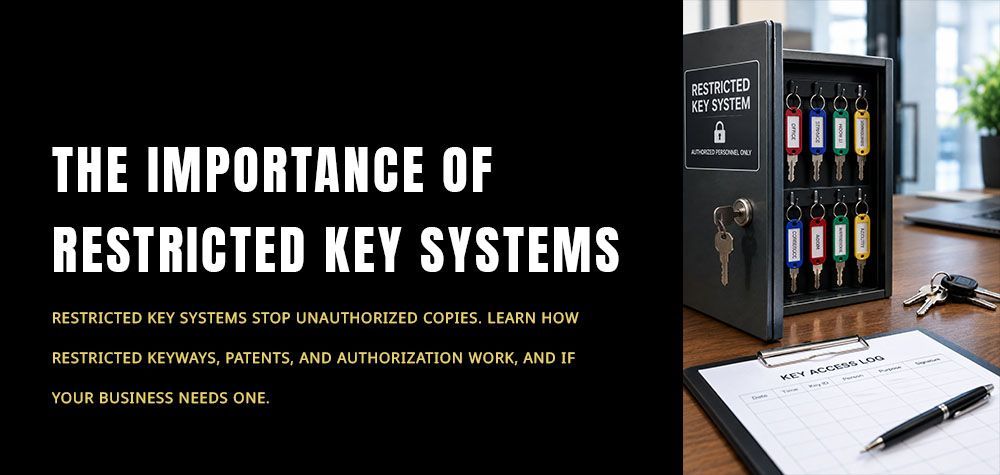
- Restricted keyways that control key duplication
These features collectively create a layered defense inside the lock itself, making unauthorized entry significantly more difficult than with standard hardware.
The Role of Restricted Key Control in High-Security Locks
One of the most overlooked aspects of lock security is key duplication. Traditional keys can be easily copied at hardware stores, often without proof of ownership. High-security locks address this vulnerability through restricted keyways and patented key systems.
With restricted keys, duplication typically requires authorization and may only be performed by certified locksmiths. This added control ensures that extra copies cannot circulate without your knowledge, reducing long-term access risks from previous occupants, contractors, or misplaced keys.
Material Strength and Build Quality Matter More Than Branding
A lock’s internal design is only part of the equation. High-security locks are also built using stronger materials that resist physical attacks. Hardened bolts, reinforced cylinders, and heavy-duty strike plates increase the lock’s ability to withstand kicking, prying, and drilling attempts.
In contrast, some locks marketed as high-security focus primarily on aesthetics or electronic features while maintaining weaker internal components. This mismatch highlights why homeowners should evaluate construction quality alongside advertised features.
Marketing Claims vs Real-World Performance
Lock marketing often emphasizes convenience, design, or smart technology while downplaying mechanical strength. A lock may advertise advanced features like remote access or stylish finishes yet offer limited resistance to physical intrusion.
Real-world performance depends on how a lock handles common burglary methods. If a lock lacks anti-drill protection, complex pin systems, or reinforced materials, it may still be vulnerable despite its high-security label. This gap between marketing and functionality underscores the importance of professional guidance when selecting security hardware.
How Installation and Door Strength Affect Lock Security
Even the best high-security lock can fail if installed incorrectly or paired with weak door components. Security is only as strong as the surrounding structure. A reinforced lock installed on a hollow door with a weak frame may still be defeated quickly through forced entry.
Proper installation, alignment, and reinforcement play critical roles in maximizing lock performance. Professional locksmith installation ensures that strike plates, screws, and door materials work together with the lock rather than undermining its strength.
Security Grades and Certifications to Look For
One reliable way to evaluate lock quality is through industry security grades and certifications. These ratings assess durability, resistance to forced entry, and performance under repeated use. Higher-grade locks typically undergo rigorous testing to ensure they meet specific strength standards.
While certifications alone don’t guarantee perfect security, they provide an objective benchmark that helps distinguish truly robust locks from those relying solely on marketing language. Checking these ratings can simplify the decision-making process and build confidence in your purchase.
Should You Upgrade Locks After a Neighborhood Break-In?
The Balance Between Smart Features and Mechanical Strength
Smart locks have introduced convenience and remote control into home security, but high-security status still depends on mechanical integrity. Digital access, mobile apps, and biometric features enhance usability, yet burglars often attempt physical entry first.
A genuine high-security smart lock combines advanced electronics with strong mechanical construction. Without this balance, digital convenience may coexist with physical vulnerability, reducing overall protection.
How to Verify If a Lock Is Truly High-Security
Homeowners can take several practical steps to evaluate whether a lock meets high-security standards rather than relying on packaging claims:
- Research the lock’s internal mechanism and materials
- Check for restricted key systems or patented keyways
- Look for anti-drill, anti-pick, and anti-bump certifications
- Confirm security grade ratings from recognized testing bodies
- Seek professional locksmith recommendations based on real-world performance
These steps provide clarity and prevent costly investments in locks that fail to deliver meaningful protection.
Final Thoughts: High-Security Is About Performance, Not Labels
A true high-security lock isn’t defined by branding, price, or marketing language — it’s defined by resistance, durability, and controlled access. By understanding the difference between promotional claims and actual security features, homeowners can make informed decisions that strengthen their property’s protection. Investing in locks that provide measurable resistance and professional installation ensures that your security upgrades offer real value rather than just peace of mind on paper.
Ready to Upgrade to Locks That Offer Real Protection?
If you’re unsure whether your current locks live up to their high-security claims, expert guidance can help you avoid guesswork. Brothers Locksmith provides professional lock assessments, genuine high-security installations, and tailored security solutions designed for real-world protection. Our experienced technicians help homeowners move beyond marketing promises and choose locks that truly safeguard their property.
Contact Brothers Locksmith today to schedule a consultation and upgrade to high-security locks you can trust.
Call Us Any Time!