Schlage vs Kwikset – Which is better?
When it comes to residential locks, you are mainly looking at 2 choices. The vast majority (95% or more) of locks are either of two major brands. The choice is between the classic, century-old Schlage, and its post-war competitor Kwikset. Before we begin rating the two, we would first like to discuss parameters that should influence the result.
- Price : When it comes to the security of your home, we don’t think that you necessarily want the cheapest possible bet. Especially if that means compromising on security and quality. However, you do need to get value for money. The price of a better designed lock should not be so high as to make it out of reach for customers.
- Lock Housing : The lock housing refers to the non-movable parts of the lock system. This is often termed as the ‘bible’ and it surrounds the cylinder of the lock. It is the foundation of the lock system. It is hence, extremely essential for the lock housing to be as sturdy as possible. Burglars that utilize forced entry (breaking through the lock mechanism using brute force) will usually try to drill through the lock mechanism to get to the interior of the lock.
- Bolt size and strength : The bolt is what eventually keeps the door from opening and essentially needs to be the strongest and most rugged part of the lock. Bolt size and strength is one of the most crucial factors that will determine the success or failure of a forced entry into your home.
- Drill Resistant Plate and Deadbolt Screws : After the bolt itself, the next most crucial bits are the drill resistant plate and the deadbolt screws. Together, they form the armor that guards the housing of the lock. Without them the deadbolts would be ‘Dead’. The drill resistant plate and the screws are directly attached to the bolt itself and any weakness in these components can make a forced-entry very easy to accomplish.
- Cylinder Tolerance and Security Pins : Besides protection from harsh brute-force entry methods, a successful lock system should be impenetrable to expert lock pickers. Though the most common form of entry are forced entries, non-forced entries can really compromise you and you don’t even realize when the burglar comes in and exits your house. Due to loopholes in the lock manufacturing process, the cylinder of the lock can always be rotated by a bit, especially using professional lock picking tools. The level that the cylinder can be rotated is referred to as the Cylinder Tolerance level. The higher the level, the more vulnerable the lock is. Similarly, security pins are inserted into the lock cylinder, making it harder to pick the lock.
The great thing to know is that in this debate between locks, time and time again there seems to be one clear winner. That is Schlage. As you can already see from the images below, Schlage makes locks that stand firm against any form of entry without using the right key.
Schlage locks have a thicker and stronger lock housing that protects the cylinder from any forced entry. The bolt size is longer and more solid as compared to Kwikset. The bolt in fact fits very tightly into the door frame and does not jiggle. The housing plate for Schlage locks is guarded by drill resistant plates and much thicker screws than its competitor. Kwikset on the other hand, doesn’t even have a drill resistant plate. Hence, when it comes to forced entry, breaking into Schlage locks is much harder.
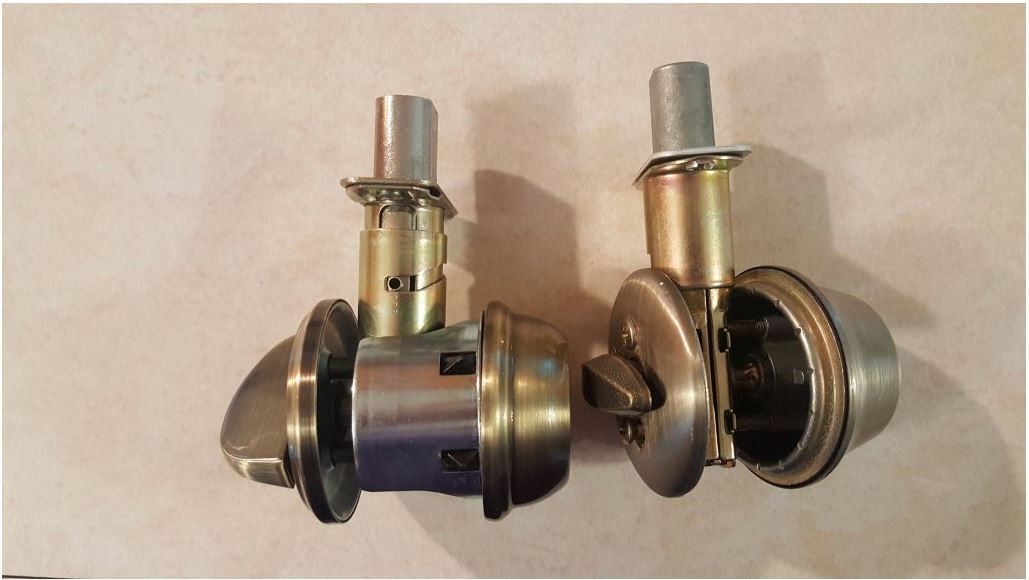
Schlage (left) vs Kwikset (right) – Notice the solid finish of Schlage locks
When it comes to picking locks, Schlage also wins hands down. Schlage locks come with a lower cylinder tolerance and have 4 security pins, as opposed to 2 for Kwikset locks. All this makes Schlage locks virtually impossible to pick, unless by serious professionals that need to take a considerable amount of time.
Showdowns are rarely ever this decisive, but when it comes to the 2 biggest players in Residential locks, i.e. Schlage and Kwikset, the edge very clearly goes to Schlage locks for creating locks that will keep your homes secure to both forced and unforced entry.
Call Us Any Time!