

Over the last 20 years, we’ve witnessed the rapid adoption of the transponder key. Most car manufacturers today use some type of transponder key for their vehicles. The core purpose of transponder keys is to eliminate auto theft, and they have become a central part of many modern cars’ anti-theft systems. Transponder keys have continuously evolved over time to better serve that purpose.
What Are Transponder Keys and How Do They Work?
September 14, 2020
How Transponder Keys Work
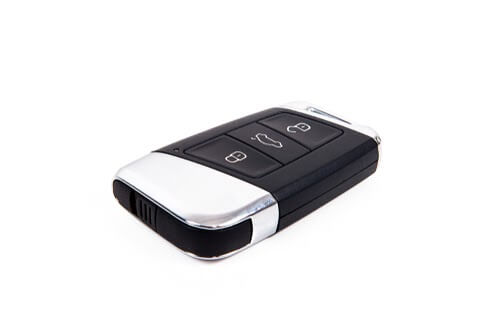
A transponder (a blend of the words “transmitter” and “responder”) is programmed to start a particular vehicle, which is key in reducing the possibility of auto-theft. Transponder keys contain a small computer chip that transmits a low-level radio signal. The microchip has a unique digital serial number, which authenticates the original car key and the duplicate car key. The signals activate the chip only when the key is near the dashboard or when it is inserted into the ignition.
When you plug a transponder key into the ignition, the Engine Control Unit (ECU) will send a coded message to the key. The original key will receive the coded message and respond back to the ECU. Once the messages are authenticated by the car, the car will start. The range of a transponder key is limited to about seven inches, and they do not require batteries.
Transponder keys are an incredibly effective means of preventing cars from being hot-wired. A vehicle with a transponder key will not start if the device at the switch does not detect the signal from the key. The car will not start if a copied key is used without the proper signal. If someone attempts to hot wire a vehicle that uses a transponder key, it won’t start because there is no signal from the key.
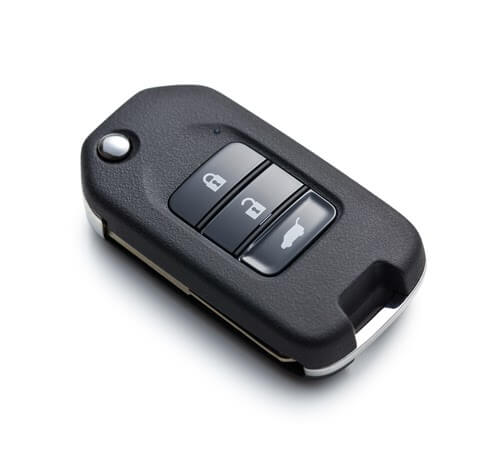
Since vehicles with transponder keys require them in order to start, many people believe that the dealerships for their particular vehicles are the only places they can go for copies. Getting a copy of a transponder key at a dealership is often expensive and inconvenient. Professional locksmiths are a great cost-effective alternative. A professional locksmith will have the expertise necessary to replace, copy, and program new transponder keys.
Call Us Any Time!
Waiting for a lock to fail costs more than checking it early. Here's how often to inspect commercial locks, and what events should trigger a check sooner.
Installed access control but still not getting the benefits? Here are the most common mistakes small businesses make, and how to avoid them.

An employee's departure leaves behind keys, codes, and credentials. Here's a step-by-step checklist to close every access gap before it becomes a risk.
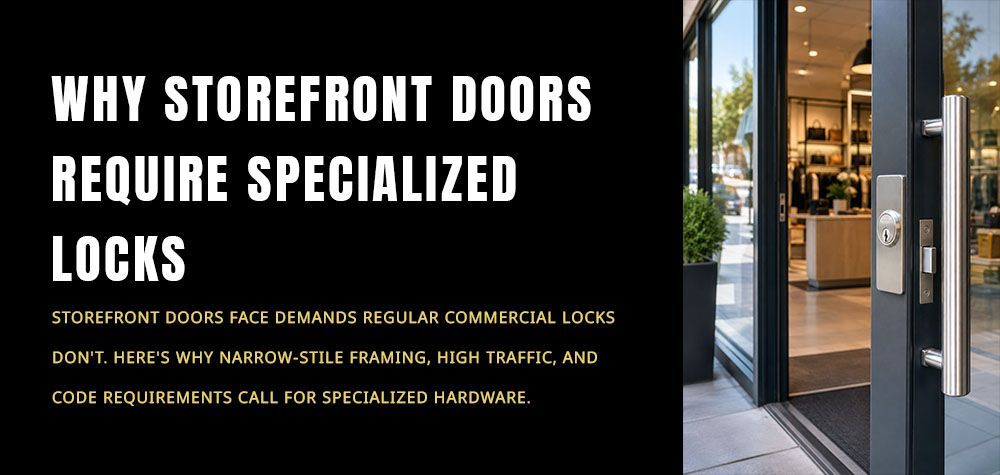
Storefront doors face demands regular commercial locks don't. Here's why narrow-stile framing, high traffic, and code requirements call for specialized hardware.

Sticking keys, misaligned doors, broken key fragments. Here are the commercial lock issues business owners run into most, and how to catch them early.
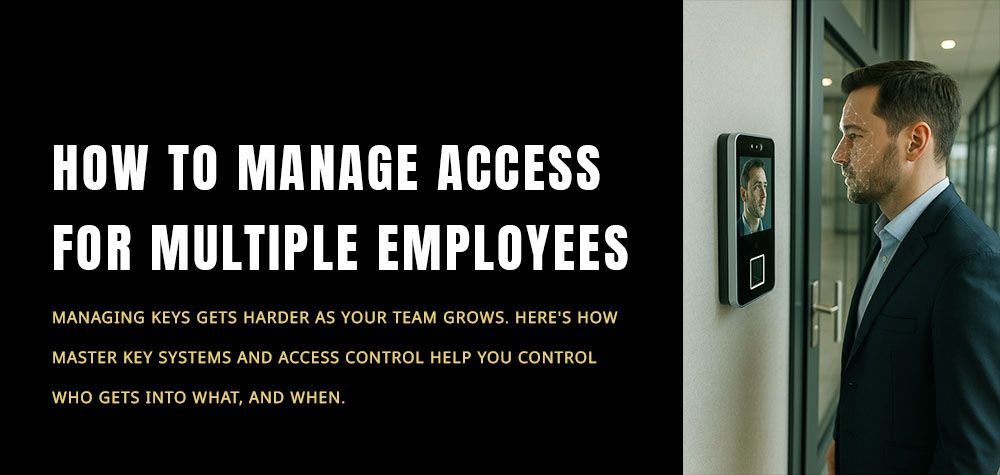
Managing keys gets harder as your team grows. Here's how master key systems and access control help you control who gets into what, and when.
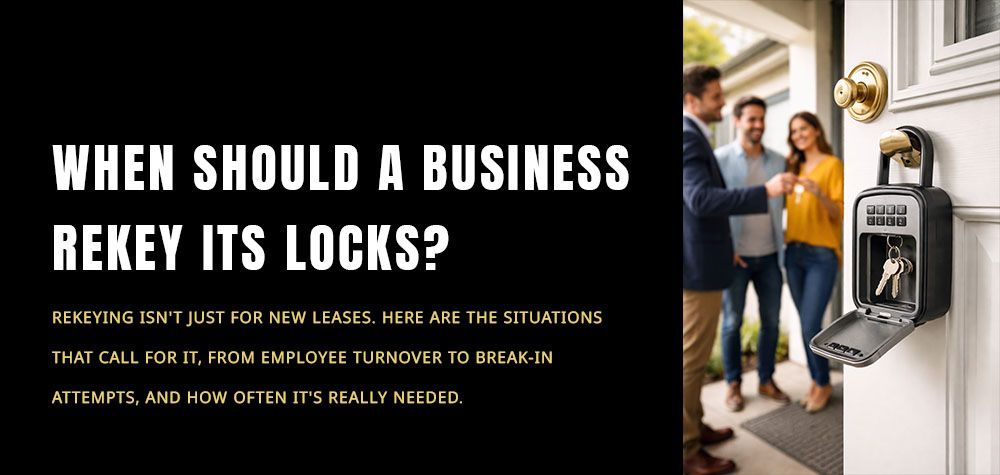
Rekeying isn't just for new leases. Here are the situations that call for it, from employee turnover to break-in attempts, and how often it's really needed.

Former employees can leave hidden security gaps behind. Learn how turnover creates risk and how to protect your business with smart access management.