Commercial Door Hardware Problems That Affect Security
Here’s a test you can run in 30 seconds. Walk to your back door tonight. Close it the way you always do, and don’t touch the handle. Now push on it.
Did it latch? Or did it swing back open an inch, or sit there unlatched, looking closed from across the room?
If you’re not sure, you’ve found the point of this article. A strong lock on a door that doesn’t close and latch properly protects almost nothing. Many break-ins succeed because a door closer stopped working, a strike plate came loose, or a hinge pin could be tapped out. Our commercial locksmith team sees these problems all the time.
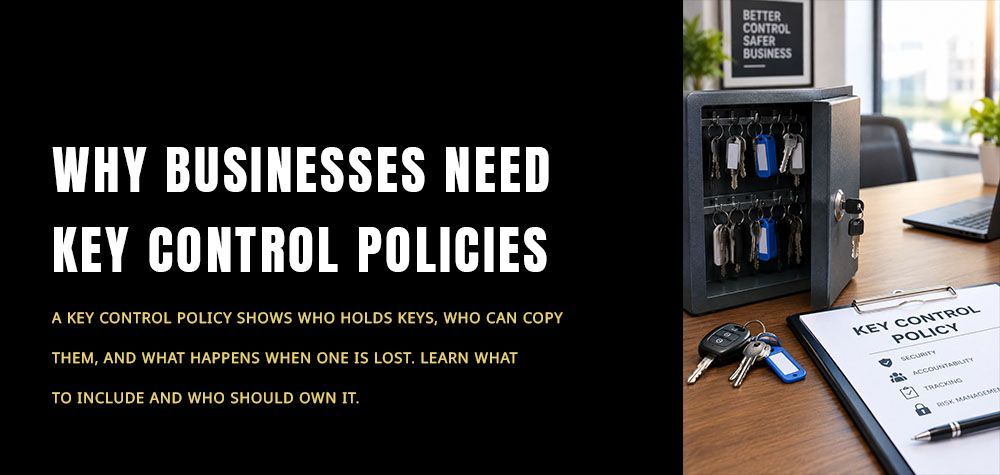
This guide covers the commercial door hardware problems that quietly weaken security. You’ll learn how to spot each one and what to do about it. It focuses on the hardware on the door, not the keys. For key management, see why businesses need key control policies.
Common Commercial Door Hardware Problems, Part by Part
The Door Closer
The door closer is the box near the top of the door with an arm attached. It pulls the door shut after every use so it latches. Most are hydraulic, which means a small amount of oil controls the speed.
Watch for these signs:
- Dark oil stains on the door or a greasy arm
- A door that slams, or one that crawls shut and stops short of the latch
- A door that drifts open and never latches
- A bent or loose arm, or missing screws
- Slow closing in cold weather, when the oil thickens
A door that doesn’t close by itself is often left open. It also lets people slip in behind you. A slamming door wears out the latch and frame faster.
Quick check: Open the door about 90 degrees and let go. It should close steadily and latch without help. If it stops early, slams, or hangs open, it needs adjustment or replacement.
Fire-rated doors have stricter rules. They usually must close and latch on their own, and many areas require regular inspection. Check your local fire code or ask your property manager.
The Latch and Strike Plate
The latch is the bolt that pops out of the door edge. The strike plate is the metal plate on the frame that it fits into. Together they hold the door shut.
Doors settle and frames shift over time. When that happens, the latch no longer lines up with the strike. It catches only halfway, or it doesn’t catch at all. Short screws and soft frame material can also let the strike plate wiggle. One hard kick can rip it out.
Other trouble spots are a worn latch that has lost its spring, paint or debris inside the strike hole, and a missing latch guard. A latch guard is a flat plate that stops someone from sliding a card or tool in to push the latch back.
These parts take the force in a break-in. A weak connection here is why doors split the frame or pop open.
Quick check: Close the door and push and pull on it. If it rattles, shifts, or the latch isn’t fully inside the strike, there’s a problem. For a related issue, read what causes a deadbolt to stop extending fully.
The Lock Itself
Picture a busy morning. An employee turns the key, and it sticks. They jiggle it, push the door, and the lock finally turns. Nobody reports it, because it works “most of the time.”
That’s a warning sign. Locks wear out, and the early signs are easy to ignore:
- A key that sticks, or a cylinder that is hard to turn
- A lever handle that wobbles, spins, or doesn’t spring back
- A deadbolt that doesn’t slide all the way into the strike
- A lock you have to lift or shoulder the door to turn
A deadbolt that only goes in part way gives very little protection. A loose lever can hide a worn latch inside the door. Worn cylinders also tend to fail at the worst time, like when you’re locking up for the night.
Don’t wait for the lock to stop working. Have it repaired or replaced while it’s still a small job.
Hinges
Hinges carry the weight of the door and keep it aligned. When they wear, the door sags. Then it rubs the frame or no longer lines up with the strike, and the lock can’t do its job.
Look at the gap around the door. It should be even all the way around. If the top corner rubs or the gap is wider at the bottom, the hinges are loose or worn.
Also check the hinge pins. On a door that swings outward, the pins are on the outside. A thief can tap them out and lift the door away, so the lock on the other side doesn’t matter. Security hinges or non-removable pins solve this.
How Door Hinges Impact Lock Alignment and Security
Panic Bars and Exit Devices
A panic bar, also called an exit device or crash bar, lets people leave fast by pushing a bar across the inside of the door. You’ll find them on back doors, stockrooms, and emergency exits. They are both a security feature and a life-safety device.
Common problems include:
- A stiff or sticky bar, from dirt, worn parts, or a door that is out of line
- A latch that doesn’t retract, or doesn’t re-latch after use
- Broken springs, loose arms, or missing screws
- Dogging left on for convenience
- Alarm batteries that are dead or disabled
Dogging holds the latch back so the door stays unlatched. Some doors allow it in certain cases, but it leaves the door open to anyone. Never dog a fire-rated door. Fire codes require it to latch.
Important: Don’t remove, chain, or block a panic bar to “improve” security. That can trap people in an emergency and break fire code. If an exit device needs repair, call a professional.
Quick check: Push the bar. It should release the door and reset when you let go. Then close the door and make sure it latches.
Storefront and Double Doors
Glass storefront doors and double doors have their own weak points.
Aluminum storefront doors often have narrow frames, so there’s little room for a lock. Pivot hardware at the top and bottom wears with heavy use, and the door starts to drag or drop. On double doors, watch the gap where the two doors meet. If it’s wide, someone can pry the doors apart or reach in with a tool. A latch guard or a security plate can close that gap.
Check the inactive door too. It usually stays closed and is held by flush bolts at the top and bottom. If those bolts don’t fully engage, that door is only held by the other leaf.
The Door Frame
The frame holds the strike plate and the hinges. If it’s weak, everything attached to it is weak too. Many break-ins work by splitting or spreading the frame, not by beating the lock.
Look for cracks, rot, dents, or gaps, especially near the strike. Press on it. A solid frame doesn’t flex. Metal frames can also bend after a forced-entry attempt or years of heavy use.
Electronic Locks and Access Control
Many businesses use electric strikes, magnetic locks, and card readers. They add convenience, but they bring new failure points: dead backup batteries, weak or misaligned magnets, door sensors that stop reporting, and cut or loose wiring.
Ask whether your doors are fail-safe or fail-secure. A fail-safe door unlocks when power is lost. A fail-secure door stays locked. The right choice depends on the door, your needs, and fire code. Magnetic locks on exit doors must also release when the fire alarm goes off.
Networked systems carry digital risks too. See how cybersecurity affects physical security.
Why Weather and Heavy Use Make It Worse
Commercial doors take a beating. They open hundreds of times a day in heat, cold, and rain. Wood swells, metal shifts, and oil in closers thickens. A door that worked in spring can stop latching in winter. See how weather affects your locks for what to watch for.
Busy doors like main entrances and loading docks need checks more often. If you run a warehouse, our guide on choosing the right locks for warehouses and industrial facilities will help.
Your 5-Minute Door Check
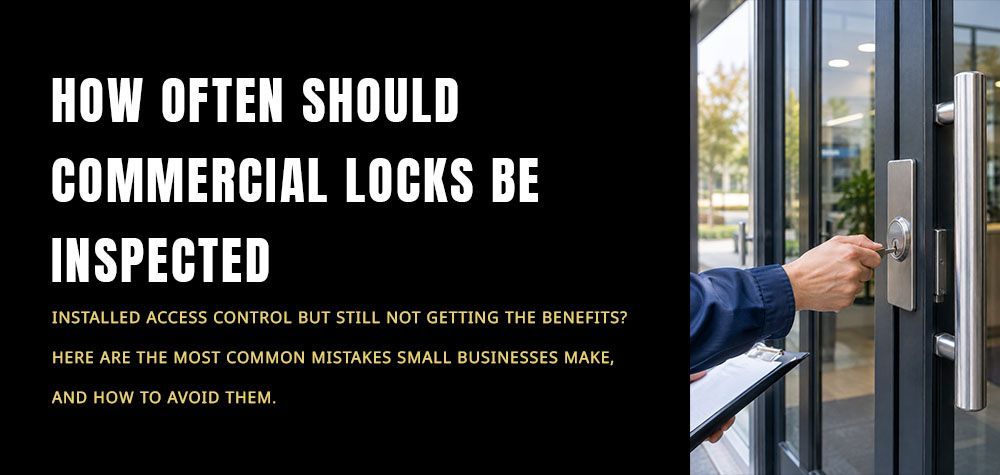
Do this monthly for busy doors and at least twice a year for the rest.
- Closer: Open the door to 90 degrees and let go. Does it close and latch?
- Latch and strike: Close the door and push. Is there any rattle or play?
- Lock: Turn the key and the lever. Does everything move smoothly? Does the deadbolt go in fully?
- Gaps: Is the space around the door even, with no daylight showing?
- Hinges: Look for loose screws, sagging, and exposed pins.
- Frame: Look for cracks, dents, or damage near the strike.
- Panic bar: Push it. Does it release and reset smoothly?
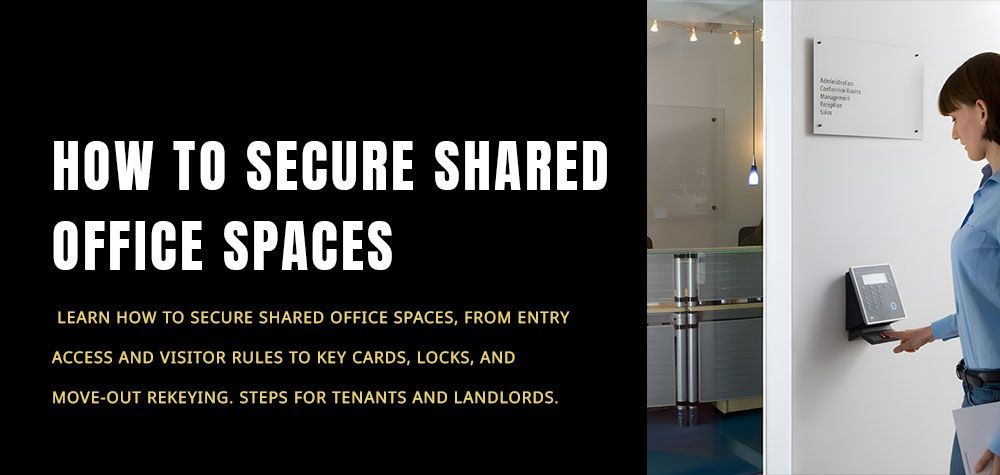
- Access control: Test the reader and door sensor. Does the door lock when it should?
- Write it down. Note what you find and what you fix.
What Causes Internal Lock Corrosion?
Which Problems Can’t Wait?
Fix right away: a door that won’t latch or lock, a broken or sticky exit device, forced-entry damage to a frame, strike, or lock, and exposed or missing hinge pins on an outswinging door.
Fix soon: a closer that is slow, too fast, or leaking, a loose strike plate or hinge, a lock that sticks, and a latch that catches only sometimes.
Routine upkeep: tightening screws, cleaning and lubricating moving parts, and adjusting closers for the season.
How a Locksmith Can Help
Our commercial team can inspect your doors and fix what’s weak. We can:
- Adjust, repair, or replace door closers
- Realign latches and strike plates, and fit stronger ones
- Repair, rekey, or replace worn locks and cylinders
- Replace worn or sagging hinges, including security hinges
- Repair or install panic bars and exit devices
- Fix storefront and double door hardware
- Reinforce frames and add latch guards
- Service electric strikes and access control hardware
- Respond fast after a break-in or forced entry
Learn more about our commercial locksmith services, find a Brothers Locksmith near you, or call our 24-hour locksmith team at (888) 947-5585. You can also check our locksmith prices to plan ahead.
We’ll be straightforward with you. Some fire-rated doors have strict rules about which hardware can be used. We’ll tell you when a job needs a specific rated part, so you don’t end up with something that doesn’t meet code.
Frequently Asked Questions
Q: What are the most common commercial door hardware problems?
A: Worn door closers, misaligned latches and strike plates, worn locks, loose or sagging hinges, sticky panic bars, and damaged frames.
Q: How do I know if my door closer is failing?
A: Look for oil leaks, a door that slams, a door that doesn’t close all the way, or one that hangs open. Any of these means it needs adjustment or replacement.
Q: Why won’t my commercial door latch?
A: Usually the latch and strike plate no longer line up, often because the door has sagged or the frame has shifted. A weak closer can also be the cause.
Q: Can I adjust a door closer myself?
A: Many closers have adjustment screws, but turning them the wrong way can make things worse. A professional can set the speed and latching correctly.
Q: Is it okay to leave a panic bar dogged during the day?
A: Never on a fire-rated door, because fire codes require it to latch. On other doors, it depends on local code, and it leaves the door unlatched. Ask a professional or your local fire authority first.
Q: What’s the difference between fail-safe and fail-secure?
A: A fail-safe lock unlocks when power is lost. A fail-secure lock stays locked. Which one you need depends on the door and fire code.
Q: How often should commercial doors be inspected?
A: Do a quick check monthly on busy doors and at least twice a year on others. Fire-rated doors may need formal inspections under local rules.
Q: Do I need to replace the whole door if the hardware fails?
A: Often not. Many problems are fixed by replacing or adjusting a closer, strike, lock, or hinge. A badly damaged door or frame may need replacement.
Final Thoughts on Commercial Door Hardware Problems
Security doesn’t live in the lock alone. It lives in everything that holds the door closed: the closer, the latch, the strike, the lock, the hinges, the frame, and the exit device. When one part fails, the rest can’t make up for it.
Run the 5-minute check, fix the small things early, and don’t ignore a door that won’t latch. If you’d like a pro to look at yours, Brothers Locksmith is here day or night at (888) 947-5585.
Call Us Any Time!