Why Businesses Need Key Control Policies
Quick question. How many keys to your business are out there right now? And who has them?
If you hesitated, you're not alone. Most small and mid-size businesses can't answer either one with confidence. Keys get handed out when someone starts. They get copied "just in case." A manager leaves, a cleaner changes companies, a spare goes missing, and nobody writes any of it down.
That's where a key control policy comes in. It's a written set of rules for who can hold keys, who can copy them, and what happens when one is lost or returned. It sounds dull, but it protects your building, your stock, your records, and your staff. Here's what a good one includes and who should own it.
What Is a Key Control Policy?
A key control policy is a simple document that answers four questions:
- Who is allowed to have a key?
- Which doors does each key open?
- How are keys issued, tracked, and returned?
- What happens when a key is lost, stolen, or not handed back?
Think of it as a rulebook for your commercial keys. It works with your locks. It doesn't replace them. Even the best commercial locksmith services can't protect a building where nobody knows who holds the keys.
Why Businesses Need a Key Control Policy
Here's what tends to go wrong without one.
- Former employees still have access. Someone leaves, and the key goes home in a pocket. Months later, nobody remembers they have it. That's a quiet security hole.
- Lost keys cost real money. When a key goes missing and you can't tell which doors it opens, you may have to rekey a whole building to be safe. A policy helps you limit the damage to what actually matters.
- Insider theft is hard to trace. If ten people share a key and something disappears, there's no way to know who was there. A sign-out record changes that.
- Keys get copied without anyone knowing. A stamp that says "Do Not Duplicate" is only a warning. It doesn't stop a hardware store from making a copy. Rules and tracking fill that gap.
- Emergencies get messy. If there's a fire, a break-in, or a late-night alarm, you need to know fast who can get in. Confusion wastes time.
- Insurance and liability questions get harder. After a theft, investigators and insurers often ask who had access. "We're not sure" is a bad answer.
Security isn't only about locks. We touch on this in our guide to choosing the right locks for warehouses and industrial facilities. Locks work best when the people and rules around them are solid too.
What a Key Control Policy Should Include
A good policy doesn't need to be long. It does need to cover these eight things.
1. A Clear Purpose and Scope
Say what the policy covers: all keys, key cards, fobs, and codes for every building and vehicle. One short paragraph is enough.
2. Who Can Hold a Key
List who qualifies and how access is approved. A simple rule works well: employees get only the keys their job requires, nothing more. Access should match the role, not the person's seniority.
3. A Key Register
This is a log of every key: its number, which doors it opens, who holds it, the date issued, and the date returned. It can be a spreadsheet or a logbook. The key is keeping it current.
4. Marking and Numbering
Number each key with a code. Don't label keys with the address or business name. If a key is lost, a stranger shouldn't know where it fits.
5. Rules on Copying
State that keys may only be copied by approved people, through approved channels. Add a line saying staff must never make their own copies.
6. Issuing and Returning Keys
Require a signature when a key is handed out and when it's returned. Include a step for temporary keys, like those for contractors, cleaners, and vendors. Set a return date.
7. What to Do When a Key Is Lost or Stolen
Tell staff to report it right away, with no blame for honest reports. Then spell out the steps: who gets told, who decides on rekeying, and how fast it happens. If the lost key is a master, treat it as urgent.
8. Offboarding and Regular Reviews
Make "return all keys" part of every exit checklist. Then review the register on a schedule, such as every six or twelve months, to catch missing or unused keys.
If your business uses restricted keys that can't be copied freely, mention them in the policy.
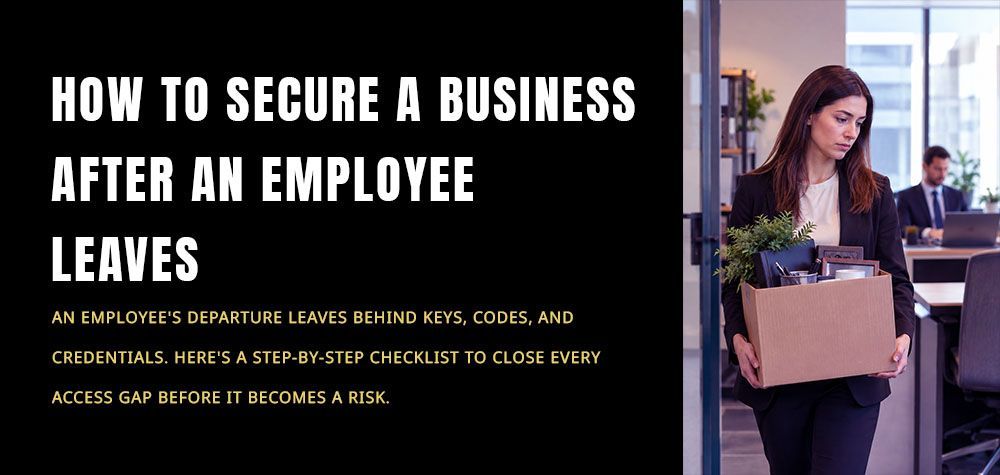
How to Secure a Business After an Employee Leaves
Who Is Responsible for Key Control?
A policy only works if a real person owns it. These roles usually share the job.
Owner or senior manager. Approves the policy and backs it up. If leadership ignores the rules, everyone will.
Key control manager. One named person, often in facilities, operations, or office management. They keep the register, issue and collect keys, and handle reports of lost keys. Name a backup too.
Department heads and supervisors. They request keys for their team and make sure keys come back when someone moves or leaves.
HR. HR triggers the "return your keys" step during offboarding, and the "issue keys" step during onboarding.
Employees. They keep their keys safe, never lend or copy them, and report problems fast.
Your locksmith. A trusted locksmith helps with rekeying, key systems, and new keys, and can advise on setup.
Put names in the document, not just job titles. "Everyone is responsible" usually means nobody is.
Common Key Control Mistakes
- No register at all. Without a record, nothing else works.
- Keeping the policy on paper only. If it isn't followed, it's just paper.
- Giving everyone a master key "for convenience."
- Forgetting contractors and cleaners. Outside people often have the longest-lasting keys.
- Never rekeying after a key is lost. Hoping it turns up isn't a plan.
- No review. Keys drift out of control slowly. A yearly check catches it.
Why Employee Turnover Can Create Security Risks
What You Can Do This Week
You don't need a big project to get started. Try this.
- Count your keys. List every key, key card, and fob you can find.
- Find out who has them. Ask each manager to confirm what their team holds.
- Create a simple register. A spreadsheet works. Add key number, doors, holder, and date.
- Mark keys with codes, not addresses.
- Collect keys no one needs. Former staff, old vendors, and unused spares go first.
- Name one key control manager and a backup.
- Write a one-page policy using the eight points above.
- Add keys to your onboarding and offboarding checklists.
- Book a review for six months from now.
How a Locksmith Can Help
You don't have to figure this out alone. Our commercial team can help you put a strong system in place:
- Rekeying locks when keys go missing or staff changes
- Setting up master key systems with clear levels of access
- Cutting and numbering new keys
- Advising on key control for offices, stores, warehouses, and multi-site businesses
- Responding quickly if a key is lost or stolen
Our commercial locksmith services cover businesses of all sizes, and with locations across the country you can find a Brothers Locksmith near you. If you have an urgent lock or key problem, our 24-hour locksmith team is ready any time. Want to plan your budget first? See our locksmith prices, or call (888) 947-5585.
Frequently Asked Questions
Q: What is a key control policy?
A: It's a written set of rules that says who can hold keys, how they're tracked, and what to do when one is lost or returned.
Q: Does a small business really need a key control policy?
A: Yes. Smaller teams often share keys casually, which makes problems harder to trace. A one-page policy is enough to start.
Q: What should be in a key register?
A: The key number, which doors it opens, who holds it, the date issued, and the date returned.
Q: How often should we review our keys?
A: At least once a year. Review sooner after a layoff, a move, a theft, or a lost key.
Q: Do we have to rekey every time someone leaves?
A: Not always. If the person returned all keys and had limited access, you may not need to. If a key is missing, or it was a master, rekeying is the safer choice.
Q: Who should be in charge of key control?
A: One named person, usually in facilities or operations, with a backup. Leadership should back them up.
Q: Is "Do Not Duplicate" on a key enough to stop copying?
A: No. It's only a warning. Real control needs rules, tracking, and sometimes special key systems.
Final Thoughts on Key Control Policies
Locks keep people out. A key control policy makes sure the right people are the ones holding the keys. It costs very little to set up, and it saves a lot of money and stress later.
Start small. Count your keys, build a register, name an owner, and write one page. Then keep it current. If you want help with rekeying, master key systems, or a lost key, Brothers Locksmith is here day and night at (888) 947-5585.
Call Us Any Time!