Why Your Spare Car Key Doesn't Work Properly
Almost everyone has one. A spare car key tucked in a kitchen drawer, a junk box, or a magnet case under the bumper. You haven't touched it since the day it was made. You've trusted it quietly, the way you trust a smoke alarm.
Then the day comes. Your main key is lost, or broken, or locked in the car. You grab the spare, and it does nothing. Or it unlocks the door but won't start the engine. Or it starts the car and none of the buttons work.
A spare car key that doesn't work is one of the most common calls a locksmith gets. And the reason is almost always one of two things: how the key was cut, or how it was programmed. This guide helps you figure out which, and how to fix it.
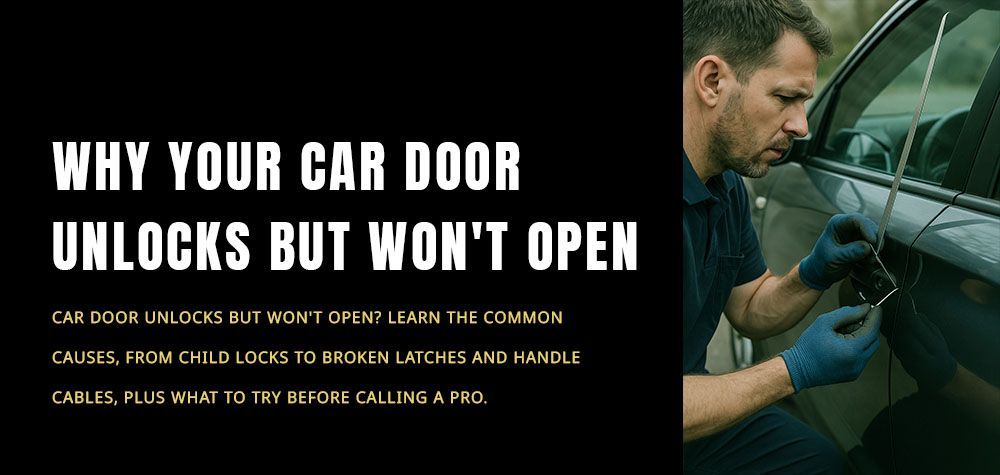
Why Your Car Door Unlocks but Won't Open (latch and handle mechanism)
First, Find Out What Your Spare Key Is Actually Doing
The symptom tells you a lot. Test the key and match what happens to the list below.
The key won't go in, or won't turn in the door. Likely a cutting problem.
The key turns in the door, but won't turn in the ignition. Likely a cutting problem, or a wrong key blank.
The key turns in the ignition, but the engine won't start. Likely a programming problem with the transponder chip.
The engine starts, then dies after a second or two. Often the chip isn't recognized by the car's anti-theft system.
It starts the car, but the lock and unlock buttons do nothing. The remote isn't paired, or the fob battery is dead.
It works sometimes and fails other times. A marginal cut, a weak chip signal, or a low battery.
Now let's look at each cause.
Problem 1: The Key Was Cut Badly
A key is a precise tool. The cuts must match the lock's pins within a tiny margin. A key that's off by a fraction of a millimeter can feel gritty, stick, or refuse to turn at all.
Why Cutting Goes Wrong
- A copy of a copy. Every time a key is duplicated, small errors add up. A spare made from a worn spare is a weak copy of a copy.
- A worn original. If the key you copied from was already worn, the copy inherits the wear.
- Poor machine calibration. Cheap or out-of-date cutting machines can produce rough or slightly shifted cuts.
- The wrong blank. Many keys look alike. A blank with the wrong shape or groove pattern won't fit the lock, even if the cuts are right.
- Rushed or low-quality work. Burrs left on the edges can catch inside the lock.
The Better Way to Cut a Spare
Where possible, a key should be cut by code, using your car's key code or VIN, instead of copying an old key. That gives you a clean key cut to the factory specification, not a key with built-in wear. Locksmiths can often get the code once ownership is confirmed.
Problem 2: The Transponder Chip Isn't Programmed
This is the big one for most cars made since the late 1990s.
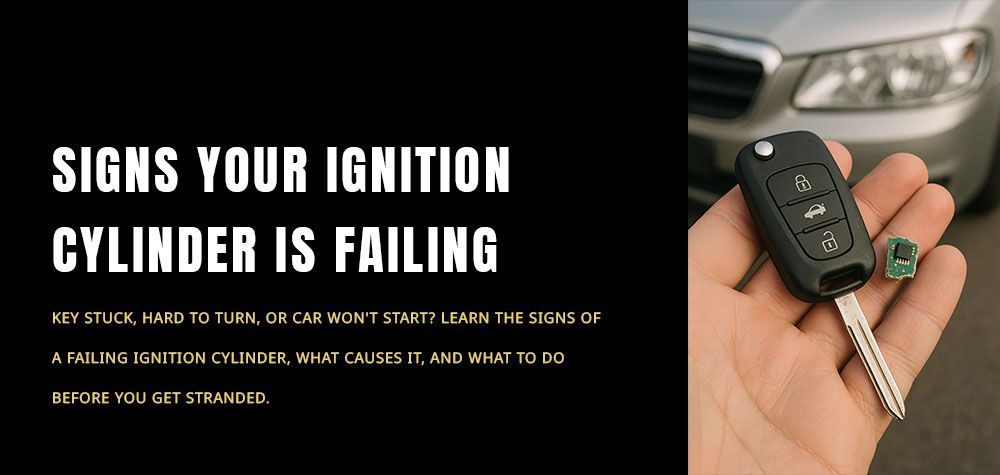
Inside the plastic head of your key sits a small transponder chip. When you put the key in the ignition, the car sends a signal to the chip. If the chip answers with the right code, the engine is allowed to start. If not, the anti-theft system (the immobilizer) blocks it.
A hardware store can cut the metal part of a key. It usually can't register the chip with your car. So you end up with a key that fits the ignition and turns, but the car still won't run.
Signs of an Unprogrammed Chip
- The key turns, but there's no start
- The engine starts for a second, then cuts out
- A key-shaped or security light flashes on the dashboard
- The dash lights up as normal, but nothing else happens
Cloning vs. Programming
You'll hear both words. They aren't the same.
- Cloning copies the chip's data onto a new chip. The car sees the copy as the same key.
- Programming adds a brand-new key to the car's computer as an approved key.
Both can work. Which one fits depends on your car. Some vehicles accept clones, and others need a new key added directly. A professional can tell you which method suits yours.
Problem 3: The Remote Isn't Paired
Many keys have buttons for lock, unlock, trunk, and panic. The remote is its own system. It has to be paired with your car separately from the chip that starts the engine.
That's why a spare can start the car but not unlock it with the button. The chip works. The remote doesn't. A spare that was cut and chipped but never paired is a common cause.
Problem 4: Dead or Weak Battery in the Fob
If a spare has sat unused for years, the battery inside may be dead. That alone can stop the remote functions. In some smart-key cars, it can also make the car fail to detect the key.
Replace the small coin battery first. It's cheap and quick. Most are the common coin type, and your manual or the old battery will show the right size.
Many smart keys have a hidden metal blade inside, and a spot on the car where you can hold the key to start it even with a dead battery. Check your manual.
Problem 5: A Cheap or Wrong Key From Online
Online keys are tempting. A "spare key for your model" for a low price looks like a bargain. But problems are common.
- The wrong chip type for your car's year and model
- A blank that's uncut, so you still need a cut
- A locked chip that can't be programmed
- Low-quality plastic and electronics that fail early
- No warranty if it doesn't work
If you buy online, check the exact make, model, year, and chip type first, and ask a locksmith whether they can program it before you buy. Some won't touch certain unknown keys.
Problem 6: Your Car Needs a Special Procedure
Some cars simply can't be programmed with a basic tool. Newer models, especially some European and luxury brands, may need dealer-level equipment or a secure online code. Smart keys (push-button start) are also more complex.
Some older vehicles can be programmed at home by following a sequence in the owner's manual, like turning the ignition on and off in a set pattern. If your manual lists a procedure, you can try it. But many cars need professional tools, and a failed attempt can sometimes lock the process.
Signs Your Car Door Lock Actuator Is Wearing Out (the actuator motor)
Why Isn't My Original Key to Blame?
Sometimes the problem isn't the spare at all. A worn original key can make a spare seem faulty, or the lock itself may be worn. A quick test: if the spare is brand new and won't work, the cause is cutting or programming. If both keys feel rough, look at the lock.
What You Can Do Right Now
- Test the key in the door, the ignition, and the buttons. Note exactly what fails.
- Replace the fob battery, if the key has buttons.
- Look at the dashboard. A flashing key or lock light points to an immobilizer problem.
- Compare the spare with the original. Hold them side by side. Check that the shape, the grooves, and the cuts look alike.
- Check your owner's manual for a programming procedure.
- Don't force it. A key that sticks can snap in the lock.
- Don't keep trying again and again. Some cars lock out after several failed attempts.
- Call a locksmith to cut, clone, or program it properly.
How to Make Sure Your Next Spare Works
If you're about to get a spare, a few steps save you from this headache.
- Make it before you need it. Copying a working key is far easier than replacing a lost one.
- Ask for a cut by code, not a copy of a copy.
- Confirm it will be programmed, if your car has a chip.
- Test everything before you leave. Door, ignition, remote buttons, trunk.
- Ask for a warranty on the work.
- Bring proof of ownership. Reputable locksmiths ask for ID and registration or title. It's for your protection.
- Store the spare safely. A drawer at home is better than a magnet box on the car.
- Test the spare once a year, and replace its battery.
Our guide on top questions to ask a locksmith before hiring is a good checklist for the call.
How a Locksmith Can Help
Our car key locksmith team can handle the whole job on the spot. We can:
- Cut keys by code, to factory specifications
- Program or clone transponder chips and smart keys
- Pair key fob remotes
- Fix a spare that was cut or programmed badly
- Handle lost-key situations with our car key replacement service
Our technicians come to you with a mobile locksmith setup, so you don't need to tow your car. If you're stranded, our 24-hour locksmith team is available any time. Find a car locksmith near you, read our breakdown of car key replacement costs, see our locksmith prices, or call (888) 947-5585.
We'll be straight with you. A few high-security or very new models need dealer-level equipment. If that's your car, we'll tell you before you spend anything.
Frequently Asked Questions
Q: Why does my spare key turn in the ignition but won't start the car?
A: The transponder chip probably isn't programmed to your car. The key fits, but the anti-theft system doesn't recognize it.
Q: Why does my spare key unlock the door but not start the car?
A: The metal part is cut correctly, but the chip isn't registered. Door locks only need the cuts. The engine needs the chip.
Q: Why won't the buttons on my spare key work?
A: The remote may not be paired, or the battery may be dead. Try a new battery first.
Q: Can a spare key stop working just from sitting unused?
A: The metal key won't. But the fob battery can die, and a chip may lose its link if the car's system was reset or updated.
Q: Can a hardware store make a working spare key?
A: For older cars without chips, often yes. For cars with a transponder, the shop may cut the key but can't program it.
Q: Is it cheaper to buy a spare key online?
A: Sometimes the key costs less, but the wrong chip or a locked chip can cost you more. Check compatibility first.
Q: Can I program a spare key myself?
A: Some cars allow it with the right steps, often needing one or two working keys. Many need professional tools. Check your owner's manual.
Q: How long does it take to fix a spare key?
A: Often under an hour with the right tools. Complex or luxury cars may take longer.
Final Thoughts on a Spare Key That Doesn't Work
A spare key fails for a short list of reasons: a bad cut, an unprogrammed chip, an unpaired remote, a dead battery, or a poor-quality key. Matching the symptom to the cause tells you what to do next.
And if you still have a working key, don't wait. Test your spare today. It's far easier to fix a bad spare now than when you're locked out in the rain. If it needs work, Brothers Locksmith is here day or night at (888) 947-5585.
Call Us Any Time!