Why Storefront Doors Require Specialized Locks
Walk into most retail spaces and the door looks unremarkable, glass, aluminum frame, a lock that looks more or less like any other. But storefront doors are actually one of the more specialized categories in commercial security, built around a specific set of problems that residential doors and even many standard commercial doors simply don't face. Understanding why matters, because installing the wrong type of lock on a storefront is a common and avoidable mistake.
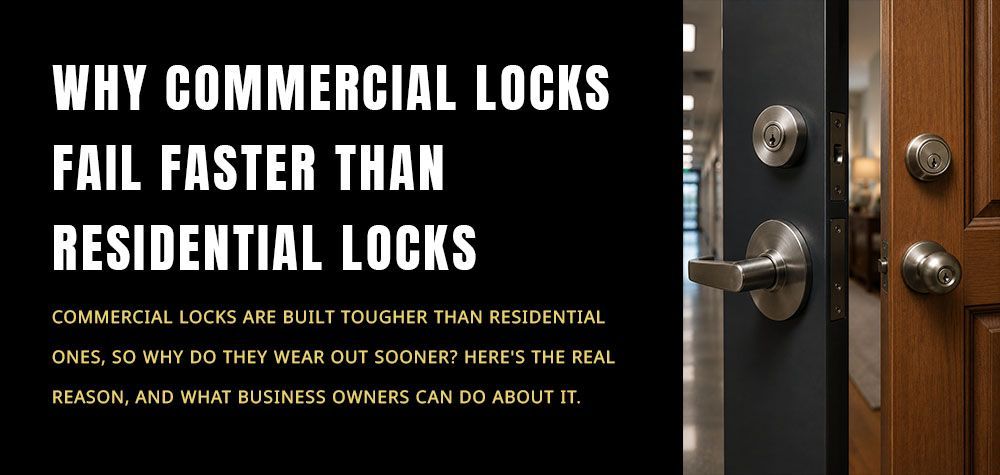
Why Commercial Locks Fail Faster Than Residential Locks
Glass and Aluminum Framing Changes What's Possible
Most storefronts use narrow-stile aluminum door frames with large glass panels, a design chosen for visibility and curb appeal rather than security. This framing is considerably thinner than a solid residential or interior commercial door, which limits the type of hardware that can physically be installed. Standard residential deadbolts often aren't compatible with narrow-stile framing at all, which is why storefronts require lock hardware specifically designed for this kind of door.
High Visibility Cuts Both Ways
A glass storefront lets customers see in and lets you see out, which is good for business but also means anyone can see exactly what kind of lock is installed, whether it looks weak or robust, and whether the store appears to be an easy target. Storefront-specific locks are often designed with this visibility in mind, offering strong security without requiring bulky hardware that would look out of place or block sightlines.
Storefronts See Far More Daily Cycles Than Almost Any Other Commercial Door
A retail entrance can be used hundreds of times a day between customers, employees, and deliveries, far more cycles than an office door or a back entrance typically sees. Hardware needs to be rated for that volume specifically. Using a lock built for lower-traffic doors on a high-traffic storefront leads to premature wear and a much shorter functional lifespan than the hardware's rating would suggest.
Panic Hardware and Code Compliance
Many storefronts are required, depending on occupancy and local fire code, to include panic hardware or specific egress-compliant locking mechanisms that allow people to exit quickly without a key, even while the door remains secure from the outside. This is a category of hardware that residential doors never need to account for, and it significantly narrows which lock types are appropriate for a given storefront.
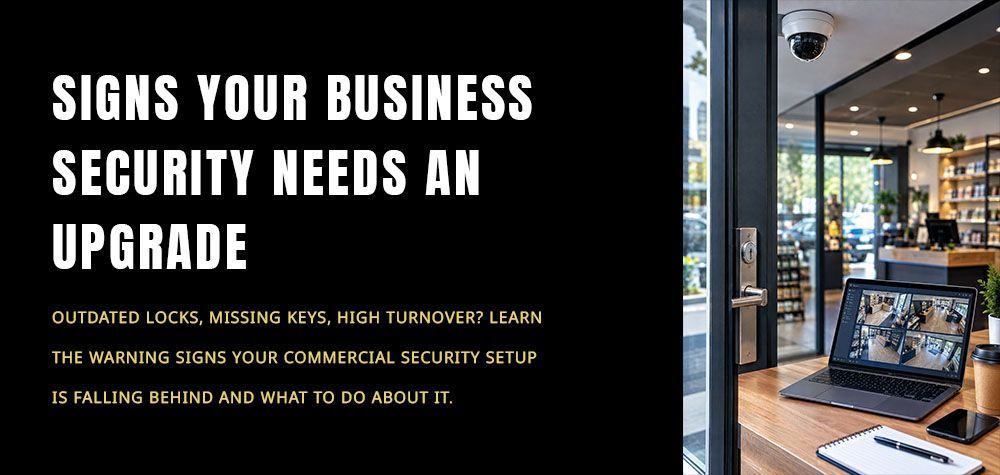
Signs Your Business Security Needs an Upgrade
Multi-Point Locking for Larger Glass Doors
Larger storefront doors, especially double-door entries, often rely on multi-point locking systems that secure the door at multiple points along its height rather than a single point, since a single-point lock on a tall glass door doesn't provide adequate resistance against forced entry. This adds complexity to installation and maintenance compared to a standard single-cylinder lock.
Weather Exposure and Daily Sun Exposure
Storefront doors, particularly ones facing direct sun or exposed to weather through recessed entryways, deal with more temperature swings and UV exposure on their hardware than most interior commercial doors. Lock finishes and internal components suited for this kind of exposure tend to hold up better over time than hardware chosen without that consideration.
What Business Owners Can Do
- Confirm your current hardware is actually rated for storefront use, not simply borrowed from standard commercial or residential lock lines
- Check whether your entrance requires panic hardware under local fire code, particularly for retail spaces with higher occupancy
- Consider multi-point locking for larger or double-door entries, especially glass doors more than a few feet wide
- Have hardware inspected periodically, since storefronts see enough daily use that wear can accumulate faster than expected
- Balance visibility and security by choosing hardware designed for narrow-stile framing rather than adapting standard fixtures that weren't built for it
How a Locksmith Can Help
A commercial locksmith familiar with storefront hardware can confirm whether your current locks are properly matched to your door type, occupancy requirements, and daily traffic, and recommend upgrades where the existing setup falls short. Professional commercial lock services cover storefront-specific installations, including narrow-stile hardware and multi-point systems, so your entrance is secured with equipment actually built for the job.
Frequently Asked Questions
Q: Can I install a regular residential deadbolt on a storefront door?
A: Usually not. Most storefronts use narrow-stile aluminum framing that standard residential deadbolts aren't designed to fit, requiring hardware built specifically for this door type.
Q: Do all storefronts need panic hardware?
A: It depends on occupancy and local fire code requirements. A locksmith or fire code consultant can confirm whether your specific space requires it.
Q: Why does my storefront lock seem to wear out faster than other commercial locks in my building?
A: Storefront entrances typically see far more daily use than office or back-entry doors, which naturally accelerates wear on the hardware over time.
Q: What's a multi-point lock, and does my storefront need one?
A: It's a locking system that secures a door at multiple points along its height rather than one. It's generally recommended for larger or double glass doors where a single-point lock wouldn't offer adequate resistance to forced entry.
Q: How do I know if my current storefront locks are the right type?
A: A commercial locksmith can inspect your door and hardware to confirm it's properly matched to your framing, traffic volume, and any applicable code requirements.
Final Thoughts on Storefront Security
Storefront doors face a combination of demands, high visibility, heavy daily traffic, thin framing, and code requirements that most other commercial or residential doors simply don't deal with. Choosing hardware designed specifically for this environment, rather than adapting whatever was available, is what keeps a storefront both secure and functional for the long run.
Call Us Any Time!